
So many new cities to explore, countries to revisit, but when Jesse and I decided to make a long-ish trip this May, China crept into our heads and made it high up on the list. I’ve been to China twice, both times to Beijing, back in 2006 and 2012. Despite living in Asia for the last 15 years, Jesse hasn’t explored much of East Asia. We visited Taiwan together in 2023, loved it, and China suddenly sounded like a great possibility.
Jesse needed a visa to visit China and in hindsight, I can also see why he has never really gravitated towards visiting China. The idea was daunting. Not just the lengthy visa process but all aspects of China; the size (how do you choose where to go?), the language, the myths (credit care theft and questionable food). But the more he spoke to people about travelling to China, the more it strengthened his conviction that this is a country that MUST be experience.
The polarising responses from, “Why would you ever go to China?” to “Oh my god, you are going to love it” started to feed his curiosity and fascination with a country that has dominated feats of human ingenuity for thousands of years.
–
We planned for a 17-day trip flying into Beijing, then fly to Yunnan for the main chunk of the trip. We thought that it’s a ‘must’ to check out the Forbidden City and Great Wall of China since it was Jesse’s first visit (and we’ve been watching some Chinese period dramas haha). May is a great time to visit China; it was sweater weather everyday! Before I start on the trip itself, here are a few apps that you should also download on your phone before you make the trip.
APPs to download before you visit China
Didi: Like Uber or Grab app in Singapore, to get private hire rides
Mei Tuan: A one-stop app for food deliveries, medication deliveries, ANYTHING
Dian Ping: Features sights or restaurants that are location-based, super useful when you’re clueless about where to go
AliPay: To pretty much make payment for everything!
WeChat (WePay): An alternative for payments throughout China. And to stay in contact with your hosts in your homestays, hotels, or drivers
AMap: Google Map or Apple Map is not as reliable as this one; it’s super detailed – highly recommended
Klook: Great for booking certain day trips, we also bought e-SIM via Klook and it’s easy to add credit to your e-SIM plan while you’re in China
* Do put in your credit card details while you’re still at your home country because the activation for a lot of the above maps requires a WeChat account (they send a OTP code to your registered number, which you can use your regular mobile phone number. The e-SIM we got from Klook doesn’t come with a China number)
Where and when?
This was how we split up the trip:-
Beijing: 5 nights
Dali: 3 nights
Lijiang: 4 nights
Tiger Leaping Gorge: 2 nights
Shangri La: 2 nights
Kunming: 1 night
BEIJING
We booked a hotel at Wang Fu Jing area, which we now know was the it place to stay in China… probably 20 years ago. That said, it was still super central and in the first ring (the city is divided by rings) where a lot of the sights were located, kinda easy to get anywhere on the train (traffic is BAD every single day that we were there).
Firstly, Beijing needs to chill a little with the number of Adidas stores they have ALL over the city hahaha. However, one thing that I actually loved about Adidas in China is that they have their own collection that’s not available anywhere else in the world; totally regretted not buying that jacket with mandarin collar and Chinese-style buttons.
It was Jesse’s first time to China and we thought a visit to the Forbidden City and Great Wall was mandatory. We were super chill travellers and pretty much just decided on what to do, where to go at the start of everyday. I personally LOVE the northern style Chinese food: doughy noodles, dumplings, spicy cold dishes.. Mmmm sign me up!
One important thing that you MUST TAKE NOTE is to NEVER visit China during their public holidays, especially if it’s one that spans across a few days. We missed the Labour day long holiday and seeing videos of how every holiday spot in China was like during that period just send chills down our spines – super intense and you definitely do not want to be stuck in a crowd like that.

You can read all about the Forbidden City and even enhance your visit by watching a few Chinese period dramas before your trip. :p Few things to note: the Forbidden City is closed every Monday and tickets have to be purchased online before your trip. We saw people being turned away at the ticketing counter because they were “sold out”.
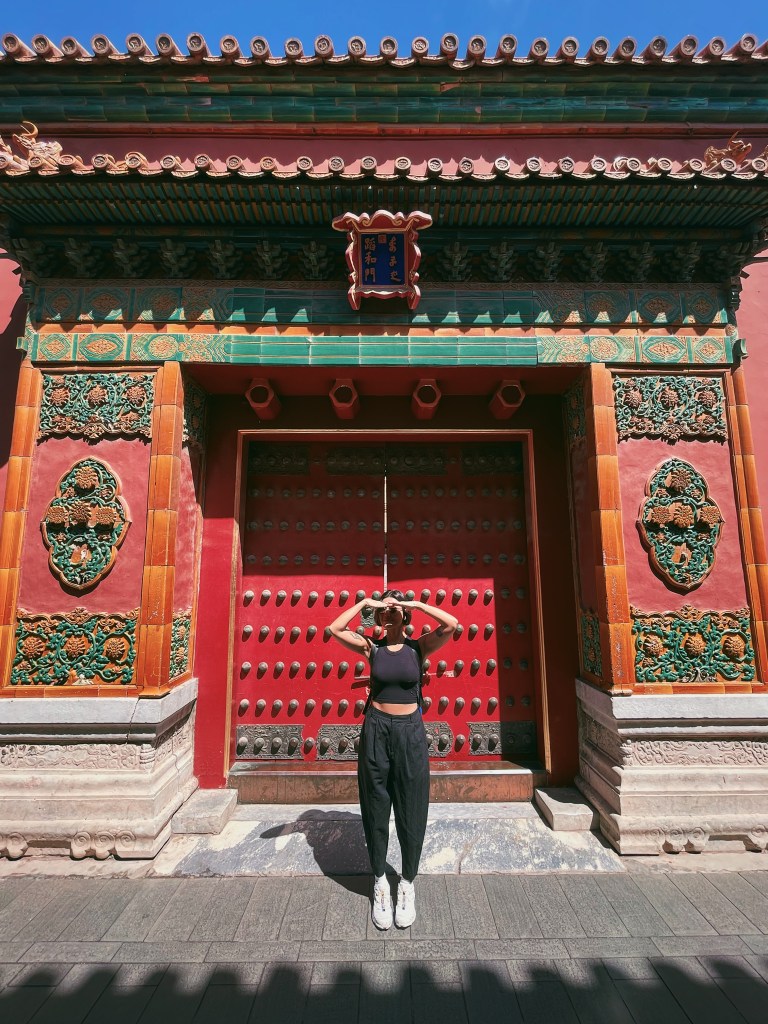
The Forbidden City was constructed in the 1400s and was used as the imperial palace since the Ming Dynasty and Wikipedia says it has 9,999 rooms. I enjoyed walking on its grounds and imagining how bizarre and different life was like back in the days. From the concept of eunuchs to how the emperors cannot have more than 3 mouthfuls of ANY dish so that no one can tell what he likes to eat (to prevent chances of poisoning), etc.
I’ve never really noticed this in my previous visits – but I think they can definitely improve on the English write ups across all of the exhibits. There were many private guides touting once you enter the museum grounds (they charge 400 yuan thereabouts), but we opted for the relatively-unreliable audio guides haha.

Another common sight at these main sights would be people in costumes everywhere. The streets near these places of interest were littered with studios that provide costumes, hair and makeup services along with a photographer. We thought it was kinda weird, but hell! Everyone is weird! And to be honest, it was actually turned out to be pretty fun having people dressed up around us:

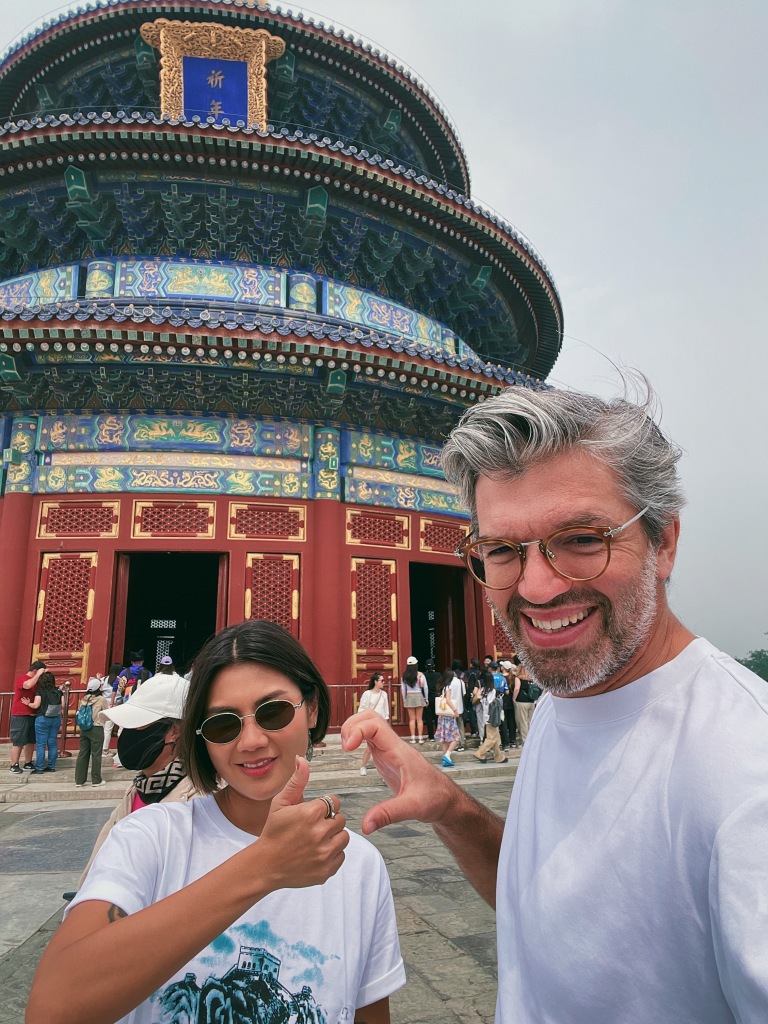
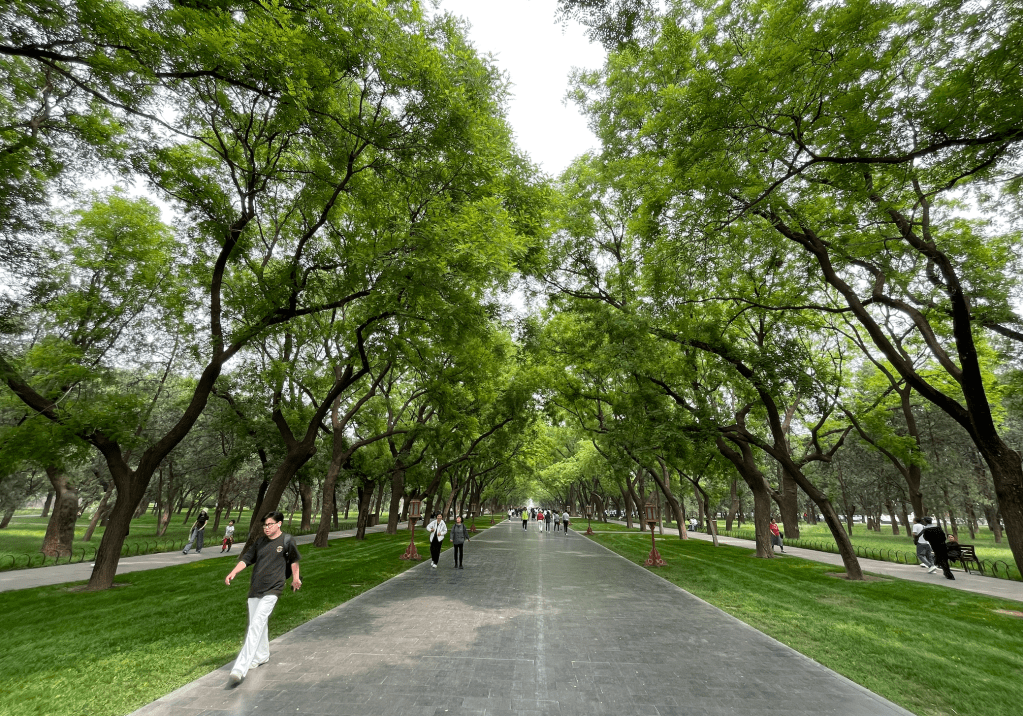
The Temple of Heaven was where the emperors would visit for annual ceremonies to pray for good weather and good harvests. It really is a cool site that’s spacious (then again it’s spacious in China everywhereeeee) and the temple itself is beautiful. What I think we enjoyed more though, were the beautiful gardens and park all surrounding the temple. On my first trip to the Temple of Heaven, I swung by real early in the morning and there were lots of people hanging out, doing their morning exercises in the park. I saw an elderly man doing calligraphy with water and a huge brush on the floor. It was quite an experience and I definitely recommend hitting this spot earlier in the day.
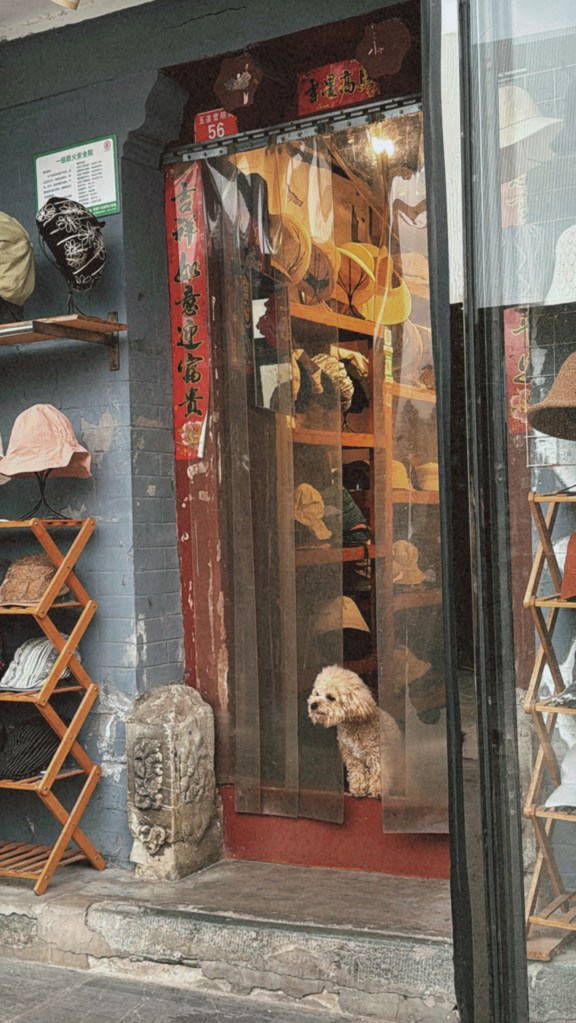
San Li Tun is still cool as ever with lots of great bars, restaurants and fancy shopping. We also checked out the Hutongs (small alleys around the residences in old Beijing) in Nan Luo Gu Xiang but my favourite was Wu Dao Ying hutong area near Confucious Temple. I found this place on the Dianping app and it’s hipster af. Great cafes and restaurants with a lot of local and international designer stores that are less mainstream. It’s not a huge area though so you prolly don’t have to allocate a bunch of time for this area.

The Great Wall of China
Before we embarked on this trip, Jesse (being him) told me that we should go to the part of Great Wall that’s “less-touristy”. Ok fine, there are many options for anyone who wants to visit the Great Wall (you could even pitch a tent and stay up there overnight). But there is no way I’m gonna do this:

Jiankou is apparently the unrestored part of the Great Wall that’s open to tourists but… I think I’ll read about other people’s adventures for now (grin). For regular human beings like me, the two main choices would be Badaling or Mutianyu. We got our tickets via Klook and went with the latter. We paid around $35/pax for the entrance + transfers to and from our hotels, and another $20/pax for cable car up to the start point.
Our walk on the Great Wall was from Tower 14 to 20 and back to 14 where the cable car station is at. You could also opt to take a cable car up and toboggan down which I did in 2012, pretty fun!

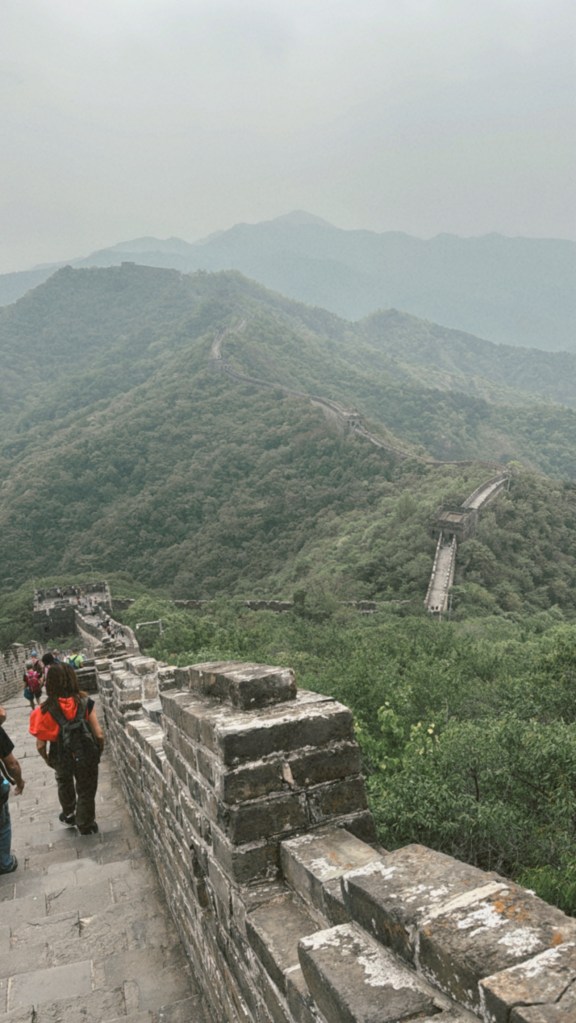
At the time when we were visiting, Jesse said that there’s a marathon that happening on the Great Wall soon. That’s so cool?! Doing a marathon on the Great Wall?! Damn.
DALI
Yunnan made up the main chunk of this China trip and we were both super excited about it (for Lijiang, in particular!) We booked a domestic flight from Beijing to Dali which set us back by about $200/pax. The first thing I noticed when I arrived in Dali was the distinct difference in their accent and the food offerings. We stayed in Dali Old Town at this really cute homestay-style hotel ran by a middle-aged couple from Beijing.
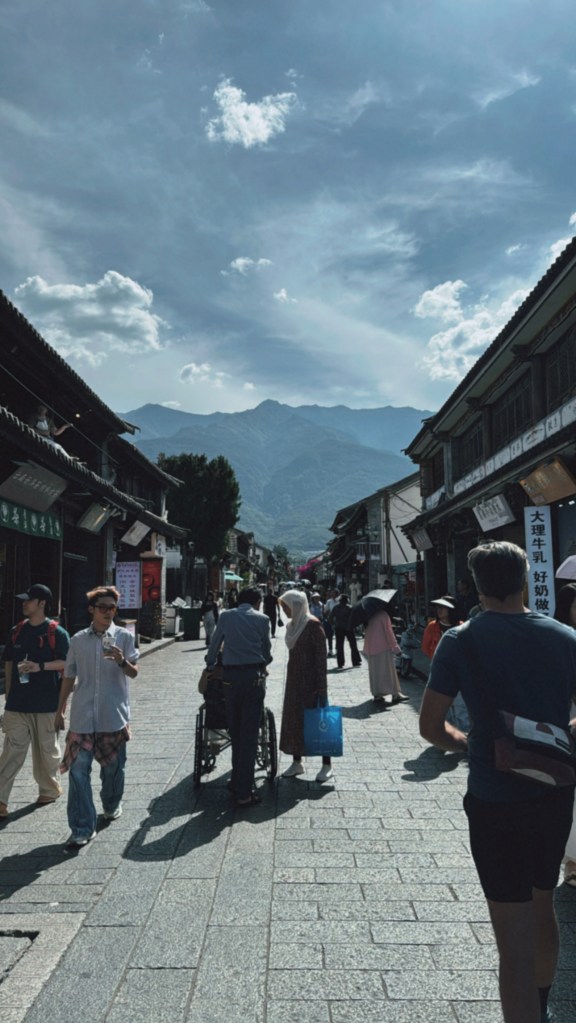


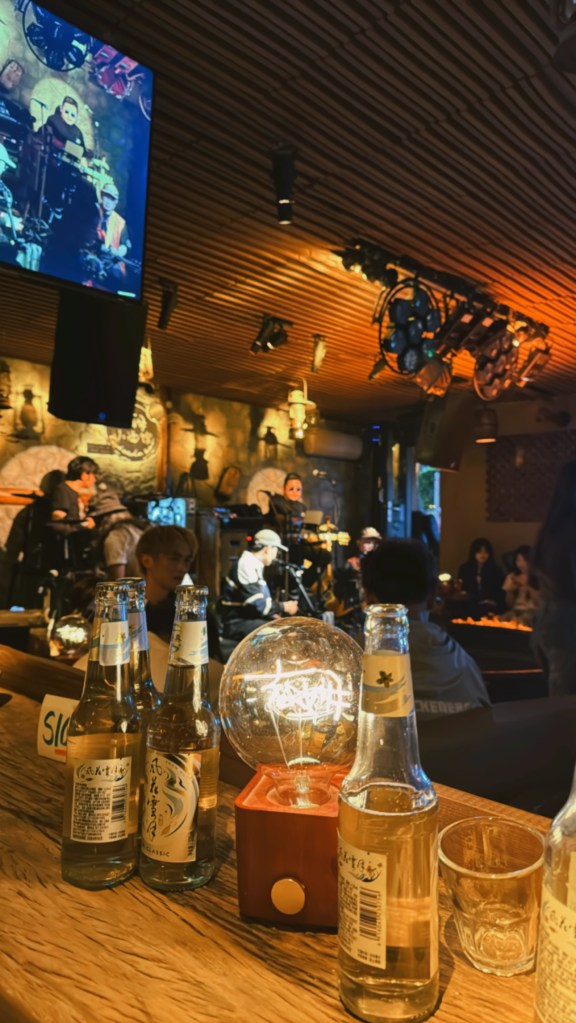
Dali Old Town was an exciting place to be. Firstly, it was easy to get around since we could walk everywhere within the ancient town and we were fully occupied and entertained by the new sights and sounds here. There is a huge population of the Bai minority here, so food was different from what we’ve had thus far on the trip. If you like tie-dye, get ready to get tie-dyed-out here; the Bai ethnic people have their unique way of doing these beautiful blue/white tie dyes that are readily available all over Dali. Lots of crotcheted apparels and knick knacks too. The night scene in the ancient town was off the charts; bars and restaurants with live music were available in every other shop along the streets.
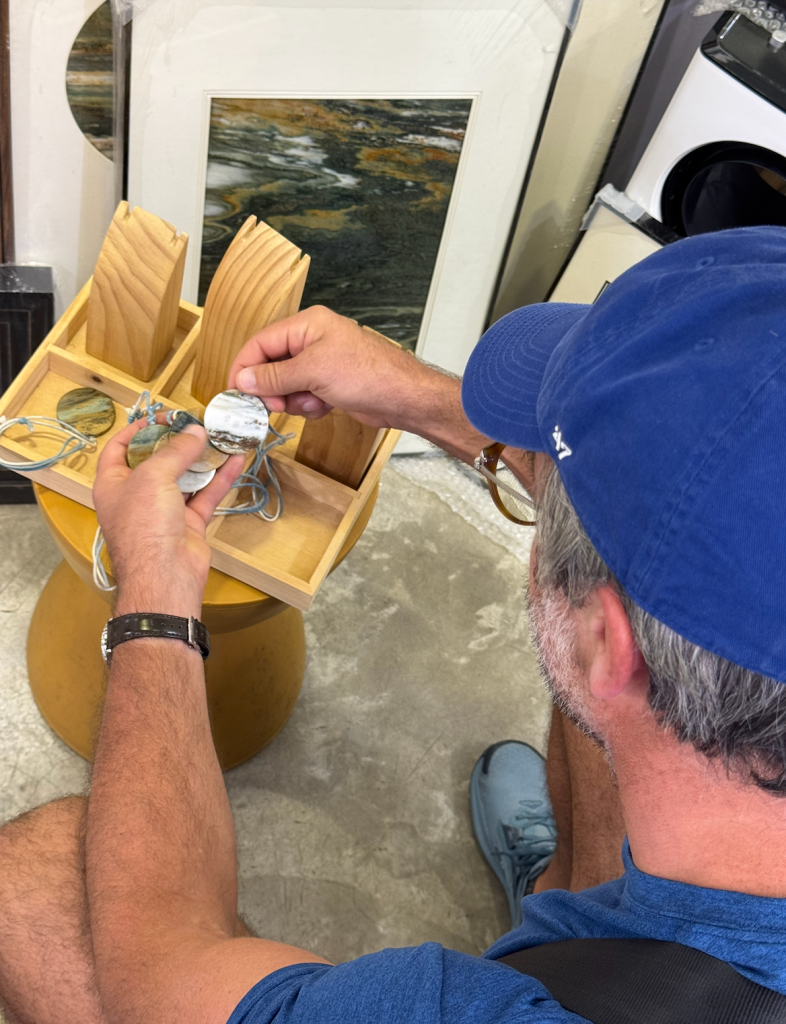
We found this shop in Xi Zhou Old Town (30 mins car ride from Dali Old Town) where they sold Dali Marble. Another regret I had was NOT bringing home a framed piece from there. The marble pieces looked like water paintings and it’s hard to wrap my head around how they were all stones! Xi Zhou was a picturesque town and definitely worthy of a half-day trip.

Another popular photo spot:

In Xi Zhou Old Town, there was this restaurant facing the paddy fields. I’ve forgotten what this restaurant is called but it’d be number one on the restaurant list in Dianping when you’re there. It would’ve been real great, to be honest, if there were less people walking around in the paddy field trying to snap their next best shot… The travel photography scene everywhere we went on this trip was totally wild.

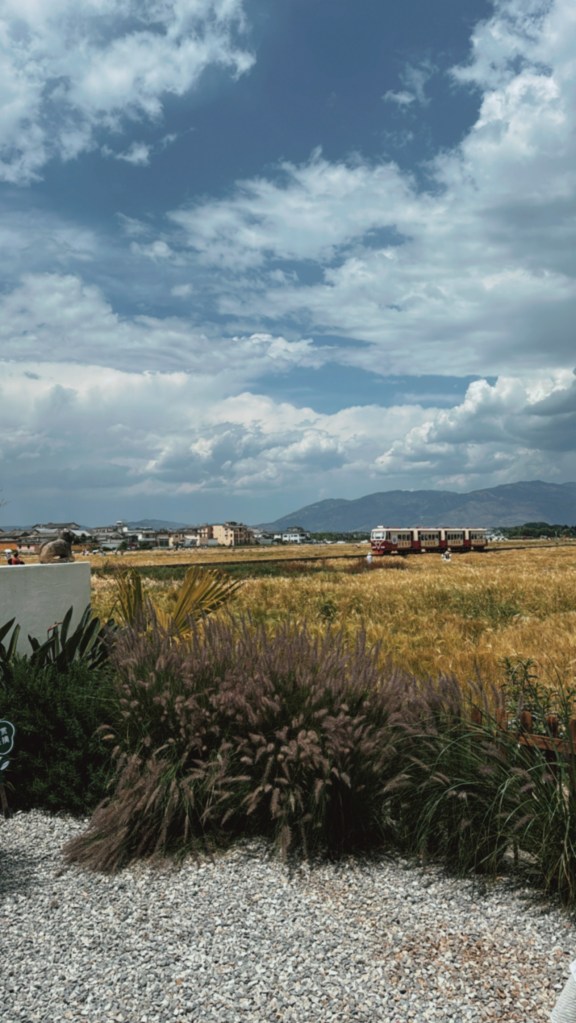
We saw the easel when we first sat down and thought, “Oh! Someone is painting something” But we quickly learnt that something was amiss because the “painting” looked nothing like the scenery lol. IT WAS JUST A PROP. Omg. These two ladies were at it for close to 40 minutes, I hope they got a good shot or two.

Back to Dali: A cafe that I’d highly recommend is this one in Dali Old Town called 小浓造物, it’s 2nd on the list for ‘Best Coffee in Dali’. We ordered this caramel banana whisky coffee from there and it is one of the best coffee I’ve had (ok fine, also because it’s spiked with whisky hehe)

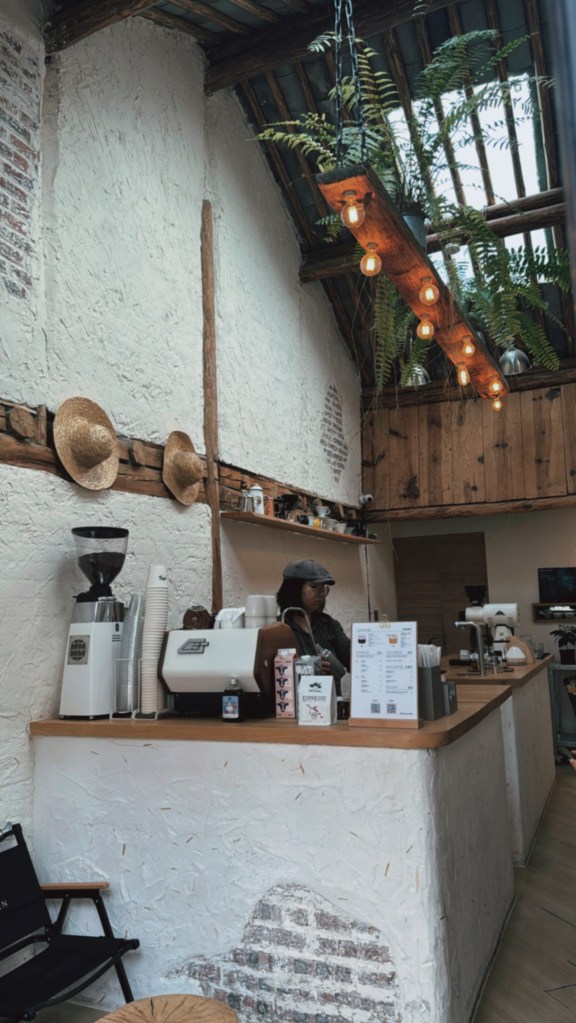
We were in there when she was about to call it a day but there was this lady (in pink) who told us that we’re at the best coffee spot in Dali. We chatted and learnt that they were actually classmates back at a coffee academy in Beijing. The owner relocated to Dali because she really liked it here and her friend who is currently living in Germany as an Italian/Chinese translator just got in that very day to visit her friend! We promised to swing by again the following day, but little did we know…
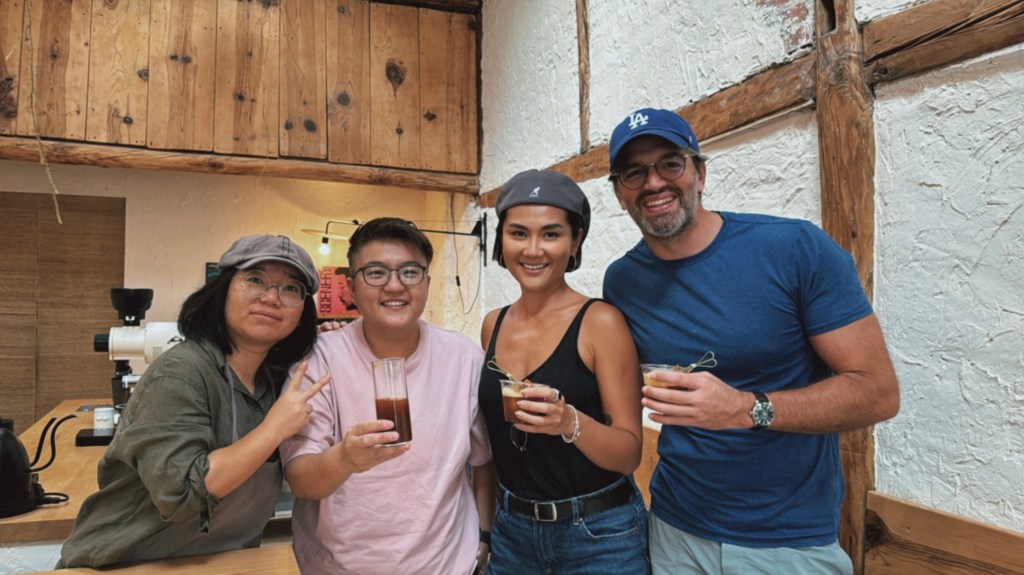
Thinking back on the experience we had makes my stomach churn. This was the last meal Jesse and I had that night and at 5am, the runs and throwing up started…
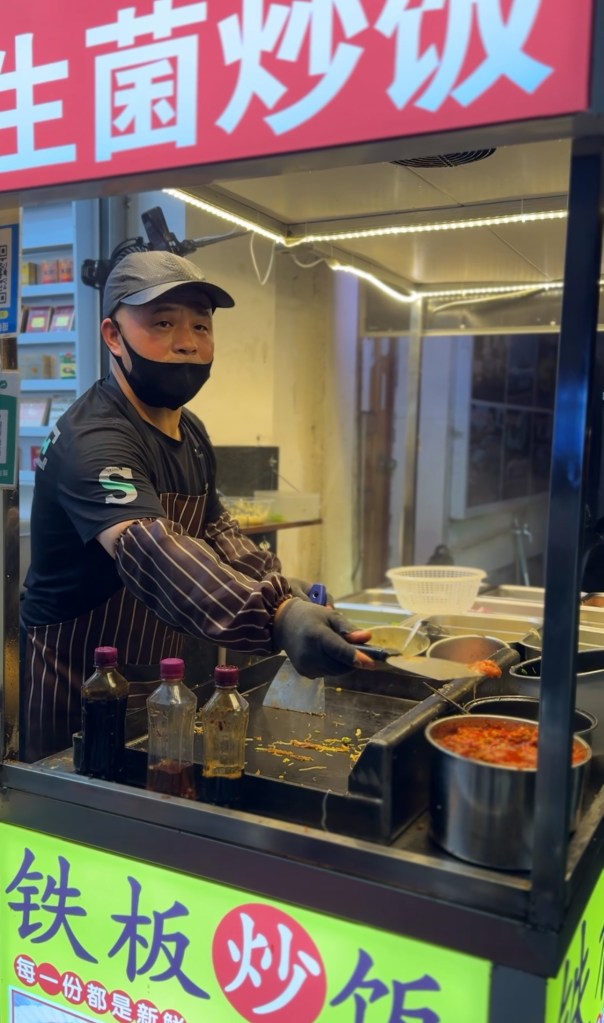
We didn’t know if it was the altitude, the beers or that fateful fried noodles supper we had (most likely a combination of all three, it could also be the bad handling of the mushrooms, we heard?) but we were down for the entirety of the following day. At this point, I wished that I had input my details into that Mei Tuan app properly because they had delivery services for medication and food. Instead, Jesse braved the streets and went out feeling shitty (literally T_T) to get meds for us from the pharmacy, we thought it would get better after a while but we got worried after hours of bad toilet runs and me hardly able to even drink water without throwing everything back out.
We contemplated extending our stay in Dali if we don’t feel better soon. The owner of the hotel (Yunxi Hotel) was super sweet and made us millet porridge when she learnt that we were both down with food poisoning. Sigh. We were supposed to explore the lake-side half of Dali on this day but had to miss all that part of Dali because of this little misfortune. Quite a shame.

We felt less feeble the following morning and decided to carry on with our travel plans: a 2-hour car ride to Lijiang from Dali. VERY VERY BRAVE. We starved ourselves and didn’t eat or drink much after that millet meal, worried that we’d have to make restroom runs during the car ride. Thinking back, I still don’t know how we made that car ride. Goodness.
But we did. We made it to Lijiang. From then on, the weak tummies and unpredictable diarrhoeas continued on and off until the day we had to come back to Singapore 9 days later. *sadness*
LIJIANG
If Dali was Seminyak of Bali, then in my opinion, Lijiang would’ve been the Ubud. The old towns in Lijiang were absolutely gorgeous and the general feel of the place was more chill and laidback. Lijiang Old Town is a UNESCO Heritage Site and it wasn’t hard to see why. We allocated 4 nights in Lijiang and in hindsight, I would’ve planned for a longer stay in Lijiang, and stay in the different old towns just to maximise our visit and see more of this gorgeous part of Yunnan.
We got a beautiful room in the heart of Lijiang Old Town – Serene Courtyard, at only $80/night. It’s got a huge bathtub, heated toilet bowl with bidet (this is crucial at this point, as you can imagine) and it was right in front of one of the main site within the Old Town called Mu Fu 木府. Breakfast was provided every morning at a nearby breakfast noodle place (It was delicious but I could only stomach a couple mouthfuls every morning)
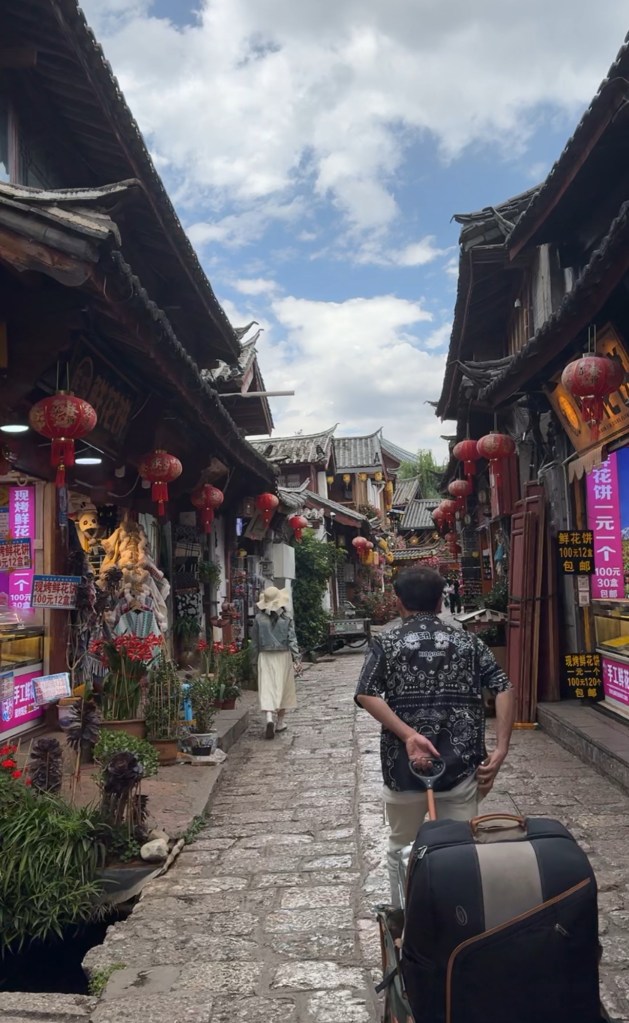

Yunnan is a great place to get high quality Pu’er tea leaves and coffee beans, both grown locally. The old town was an organised chaos that was enchantingly beautiful; like it came out of a painting.

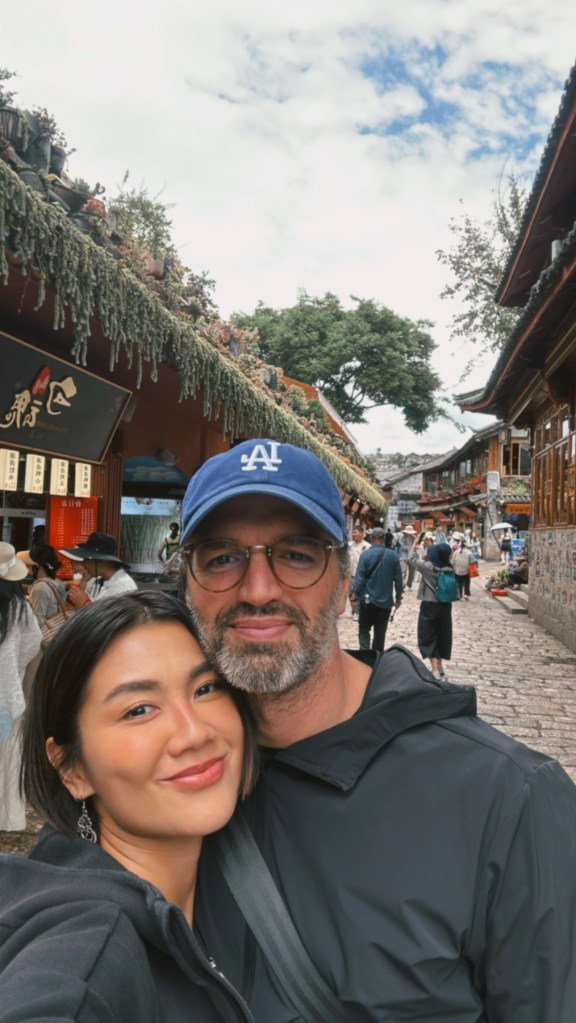


As you can imagine, Lijiang was crawling with tourists and people in costumes everywhere. No judgement – if you’re planning to visit this few spots in Yunnan, Lijiang is definitely the place (besides Dali and Shangri La) to do your photoshoots. The old town is a great backdrop and you can also opt to go out to the plains or the mountains.
The Old Town is built on a hill, and the view from the top was amazing. I’ve seen photos of the Old Town from a vantage point up on the hill and it’s gorgeous! You might consider doing that if you do end up in Lijiang too.


We booked a driver for a full day the following day to do a trip outside of Lijiang Old Town to visit three other Old Towns – Yu Hu 玉湖村 (the furthest from Lijiang Old Town, about 45 mins car ride), Bai Sha 白沙镇 and Shu He 束河古镇. We paid 300 yuan to have the driver for the entire day.
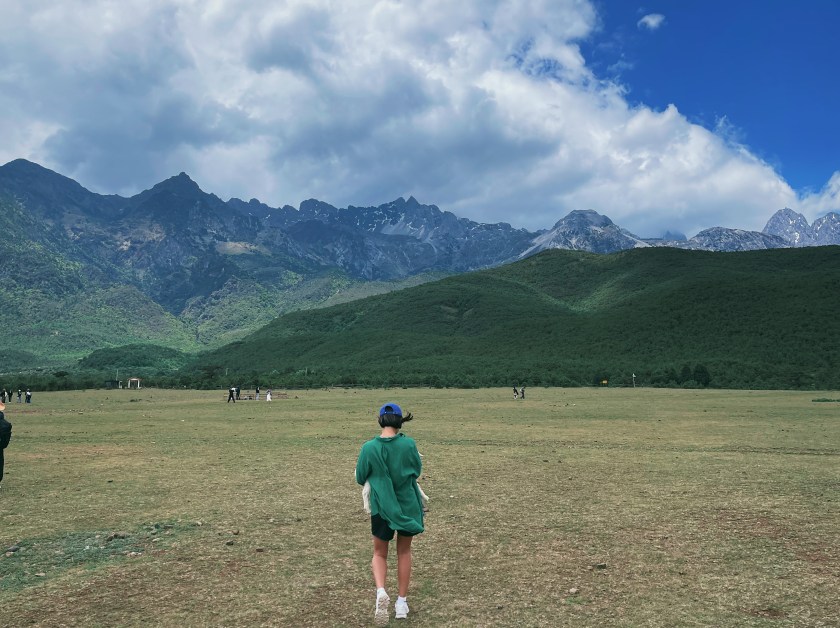
Yu Hu Village 玉湖村 stands at the bottom of Yu Long Snow Mountain. If you think that the view of the snowy mountains was spectacular from Lijiang, wait till you get to Yu Hu Village! Out of all the old towns that we’ve visited, Yu Hu is the most “undeveloped” BUT there were a lot of building and construction ongoing while we visited. We chatted with some of the locals and learnt that the resort and tourism scene has exploded over the last few years and we believe it’s going to be packed with tourists in no time.
If you do have more time in Lijiang, I would actually recommended spending a night or two in Yu Hu Village especially if you wanna get away from the noise and hustle for a while. Apart from that awesome view of Jade Dragon Snow Mountain, we spotted a few really cool resorts here – many built with stones for walls, which is apparently how the Bai ethnic people build their houses.


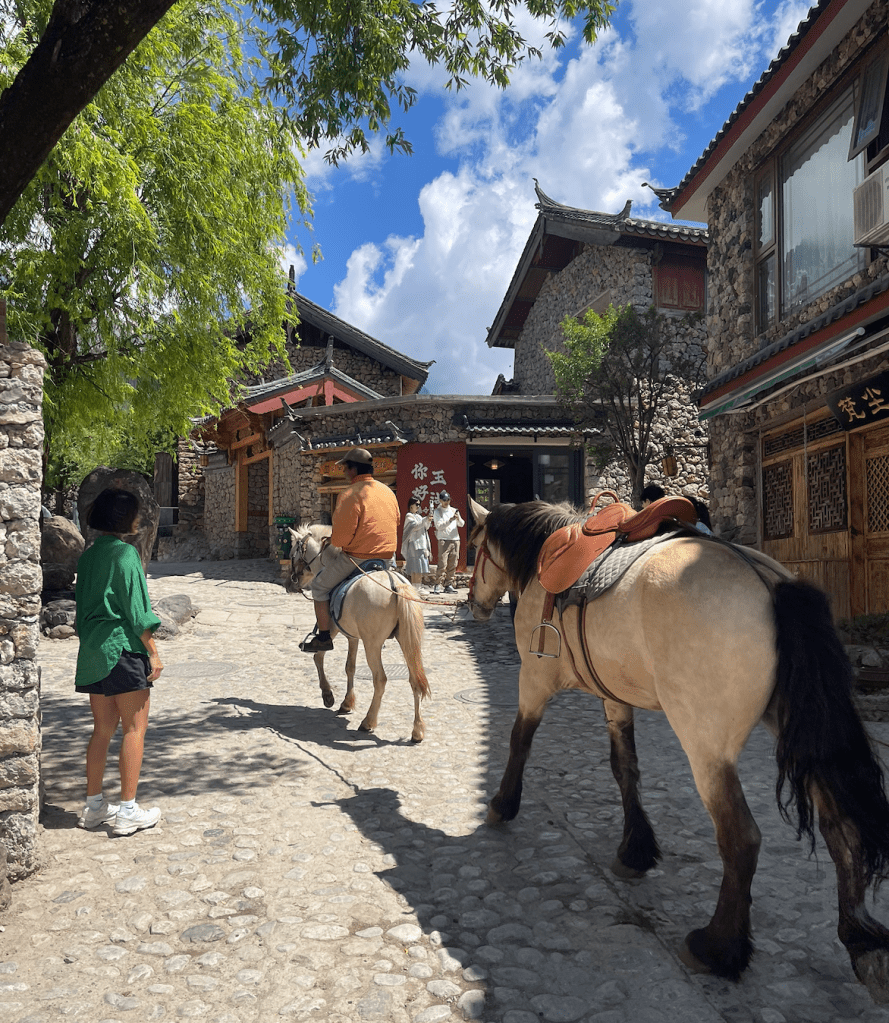

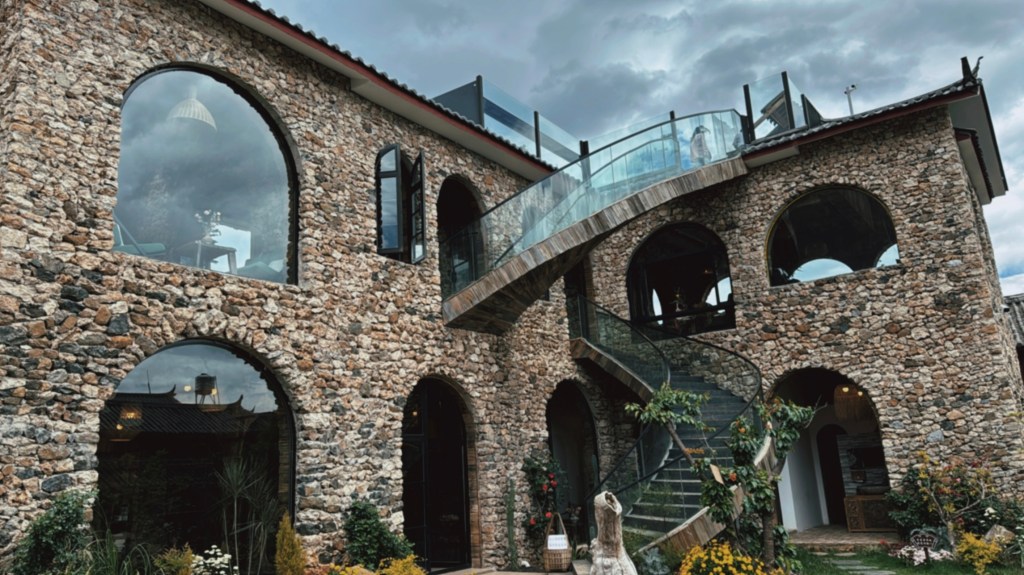
One of the sights in Yu Hu Village was a lake. Hmm, the lake was kinda underwhelming; I didn’t even take a photo of it. BUT, when we got to the big fields near the lake, we saw this:
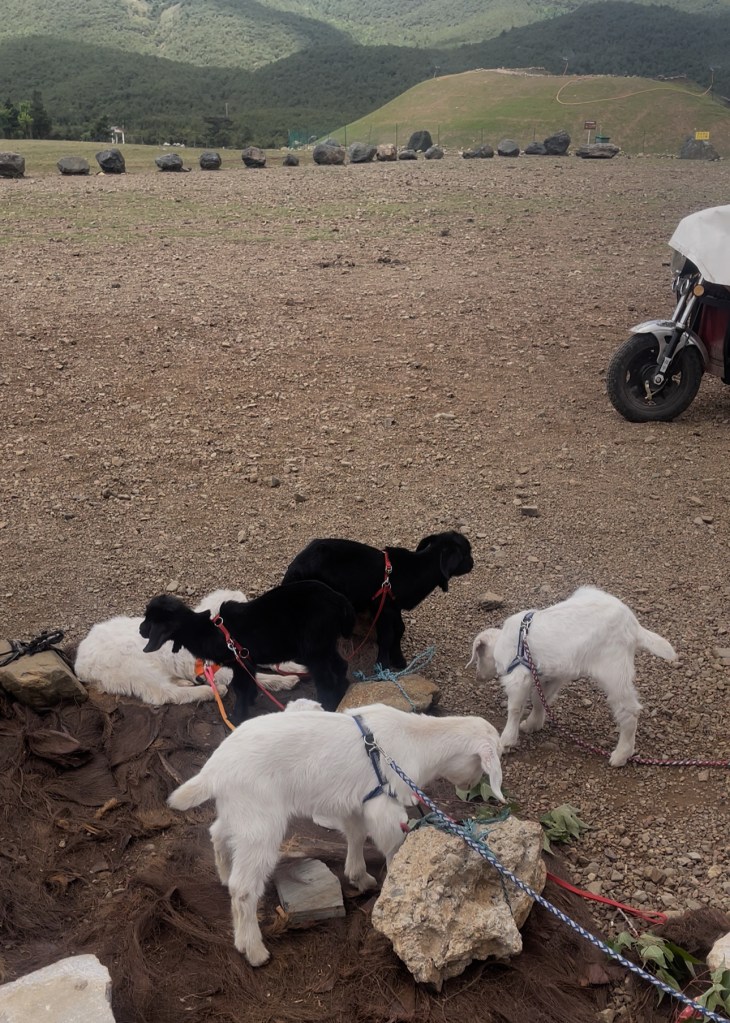

This was probably the highlight of my day, those baby goats were so cute. I stopped myself from thinking about what is going to happen to them once they grow up. But I guess that’s how life is for them – utilised / exploited / monetised. I paid money to take one for a walk… 35 yuan for 30 mins. I am sure I enjoyed the walk more than the baby goat, but I do hope he at least had a bit of fun too.
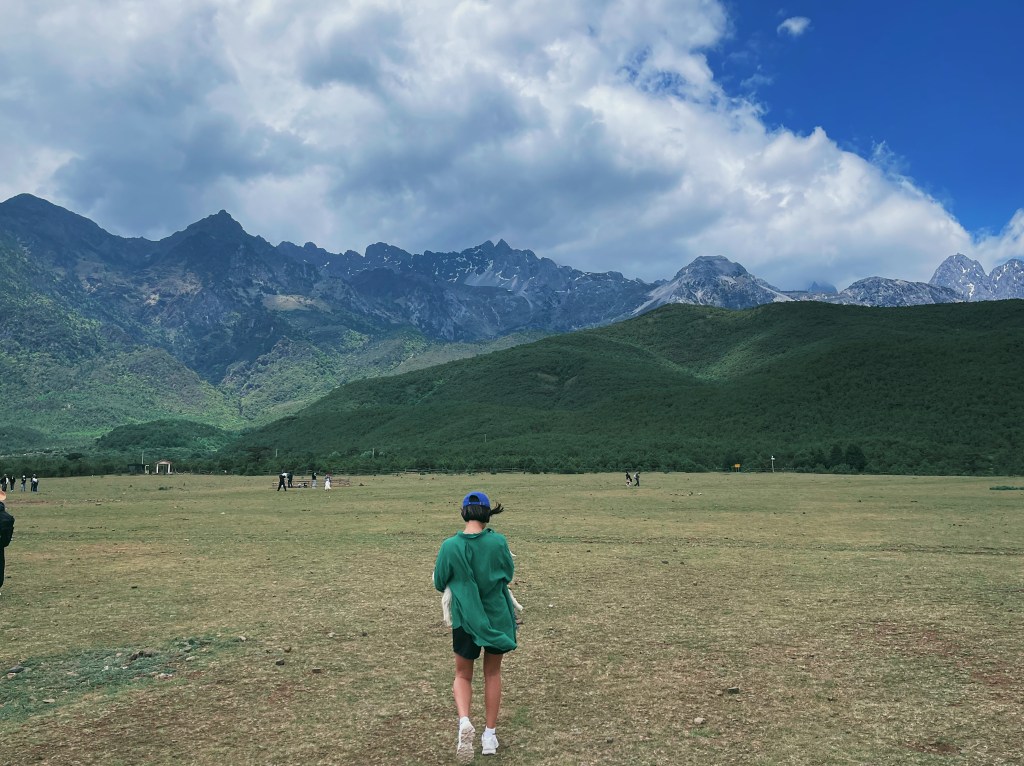


The car ride to Bai Sha Town was easy and took another 20 mins or so. Bai Sha was also beautiful, jees, all of these old towns… We grabbed lunch here and spotted a lot of cafes where you could CLIMB ONTO the roofs to take photos against a stunning mountainous backdrop. We didn’t do it, but we were definitely impressed with the travel photography here and how the shops here really milked its gorgeous surroundings.
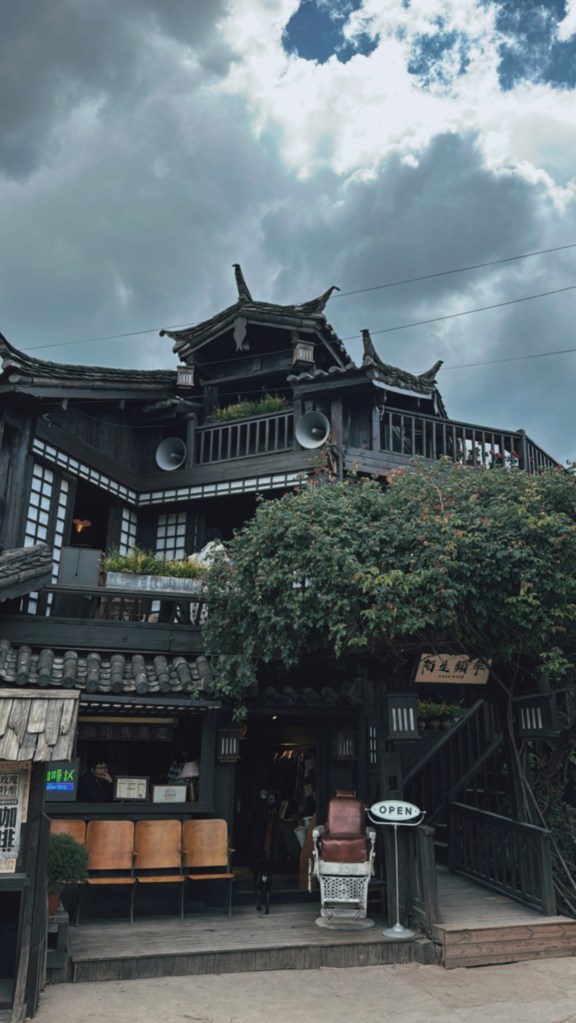

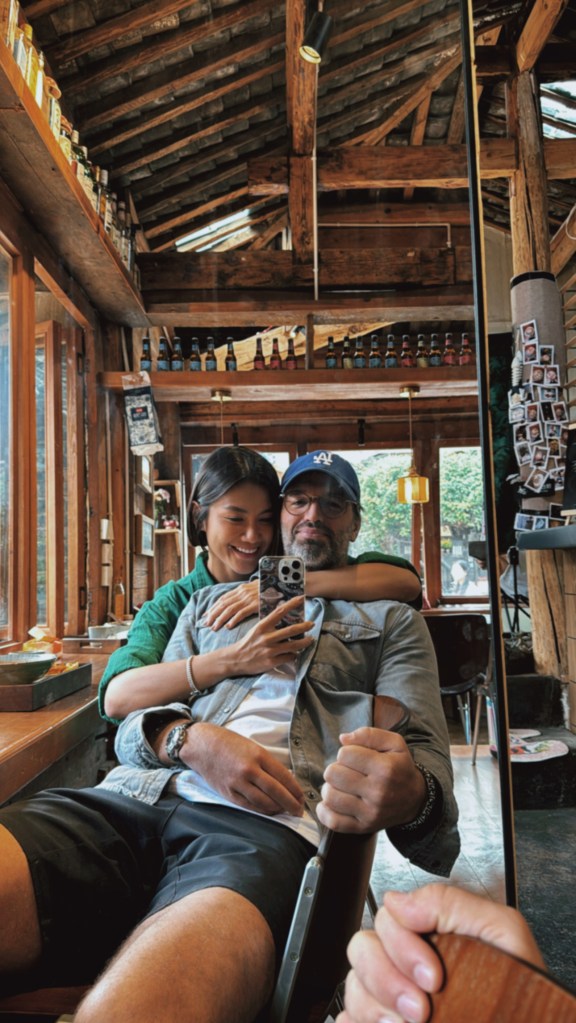
Because of it’s proximity to southeast Asia, Yunnan actually offers a great selection of Thai-style cuisine. They are big on som tams (Thai Papaya Salad). Lunch was Yunnan style rice noodles with a twist – tom yam soup! It was a breath of fresh air and a good break from all the Chinese food we’ve been having.
Update: I’ve learnt that Yunnan has a most number of tribes within the country and the thai-cuisine we had were actually food from 傣族 Dai Tribe.
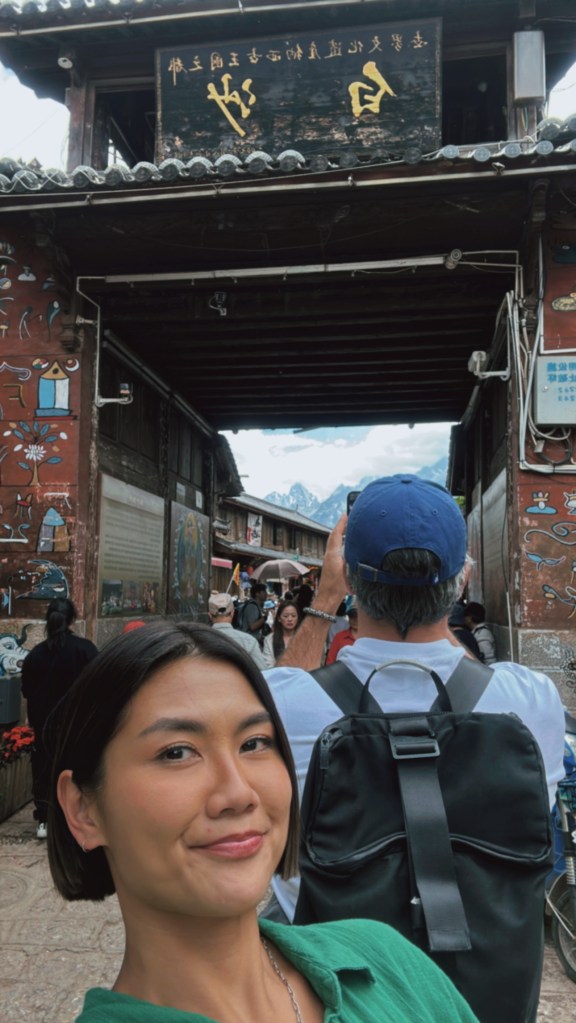

I’m excited to share about Tile Cat (瓦猫) – the Bai people who dominate the local ethnic population believe that these fierce-looking cats are auspicious items which can bring households protection and wealth. I’ve noticed these little gargoyle-like statues at the top of roofs in Yunnan but I never knew what they were until I Googled it.

These clay figurines have been present since the Ming Dynasty and today, they are still popular gifts or a must-have for new houses built. We visited this store in Bai Sha Town where they have a few REAL Tile Cats for sale – these were taken off roofs; some of them have moss on them and all of them were uniquely aged. We were very tempted to buy one of these original cats home, but settled for a smaller, more modern, friendlier-looking replica instead.

with a gapping hole in its place. Interesting.
We bailed on Shu He Old Town because…. we’ve seen enough old towns haha. Visiting all 3 old towns within a day is, however, very doable. We decided to return back to Lijiang Old Town for dinner instead.
Lijiang has got to be my favourite stop in Yunnan. If I could replan my itinerary, I might skip Shangri-La altogether and stay in Lijiang longer, and split up the nights in different areas within Lijiang, stay in different hotels.
We read that the golf course with the highest altitude in Guinness Book of Records was in Lijiang (I just did a little fact check, and realised that it’s apparently been overtaken by another one in India that stands at 3900m above sea level) standing at 3100m. Jesse was itching to make another trip to Lijiang WHILE we were still in Lijiang hahaha.

TIGER LEAPING GORGE
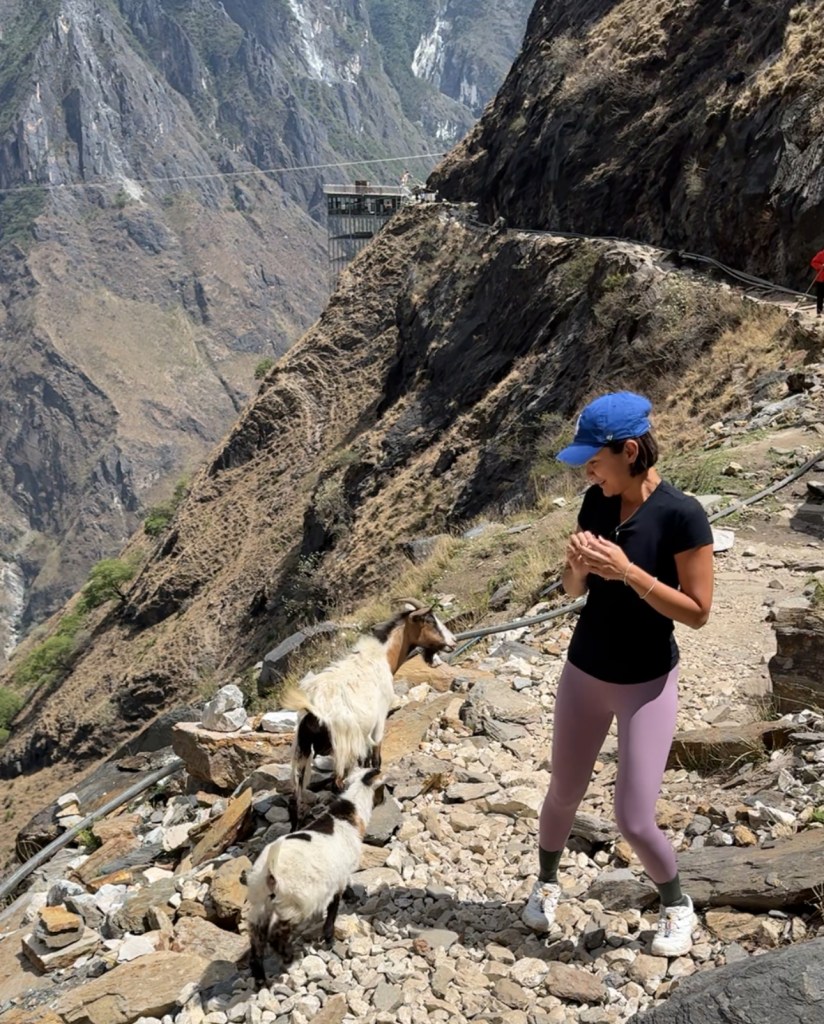
Tiger Leaping Gorge can be a day-trip from Lijiang; it’s a 2-hour drive away. We’re actually moving down in elevation but the roads in the gorge were pretty winding and precarious-looking. We hired the same driver to take us there and it set us back by around 450 yuan. We had initially planned to spend 2 nights here because Jesse wanted to do a 25km hike and I was only down to do a PART of it lol. But because of unforeseen circumstances with our bad tum-tums, we settled on just a short 2-3 hour hike together from Halfway Hotel up to our hotel (云泊金沙) on the map below. Here on this map are some of the simpler routes that are available near our hotel.
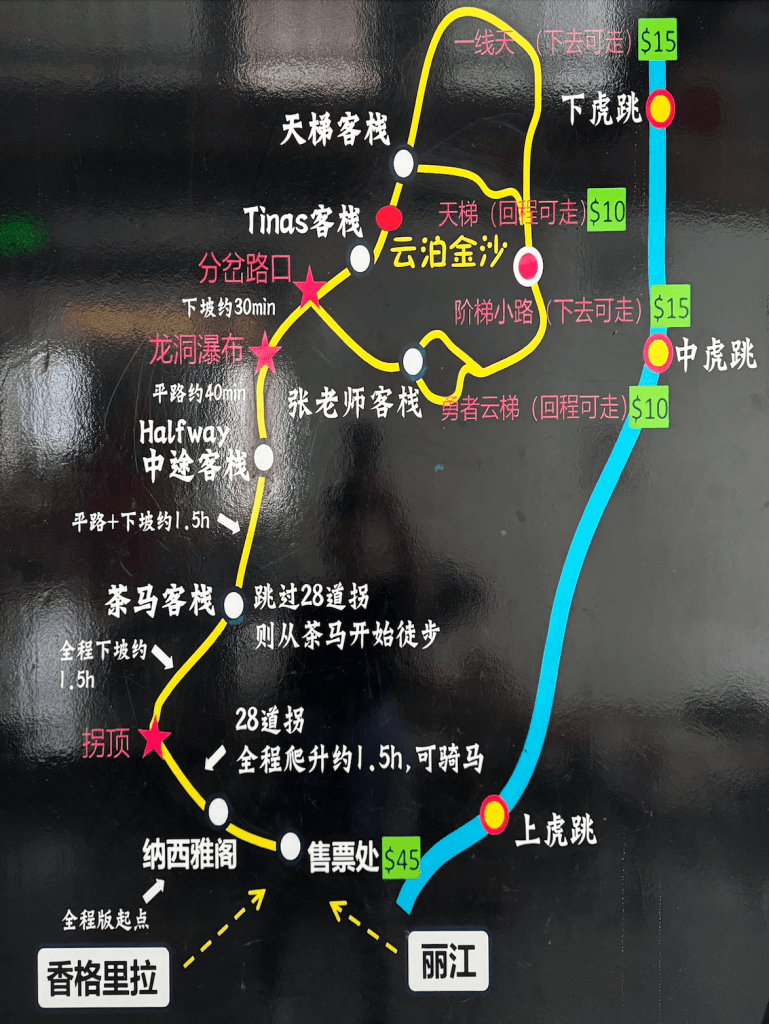
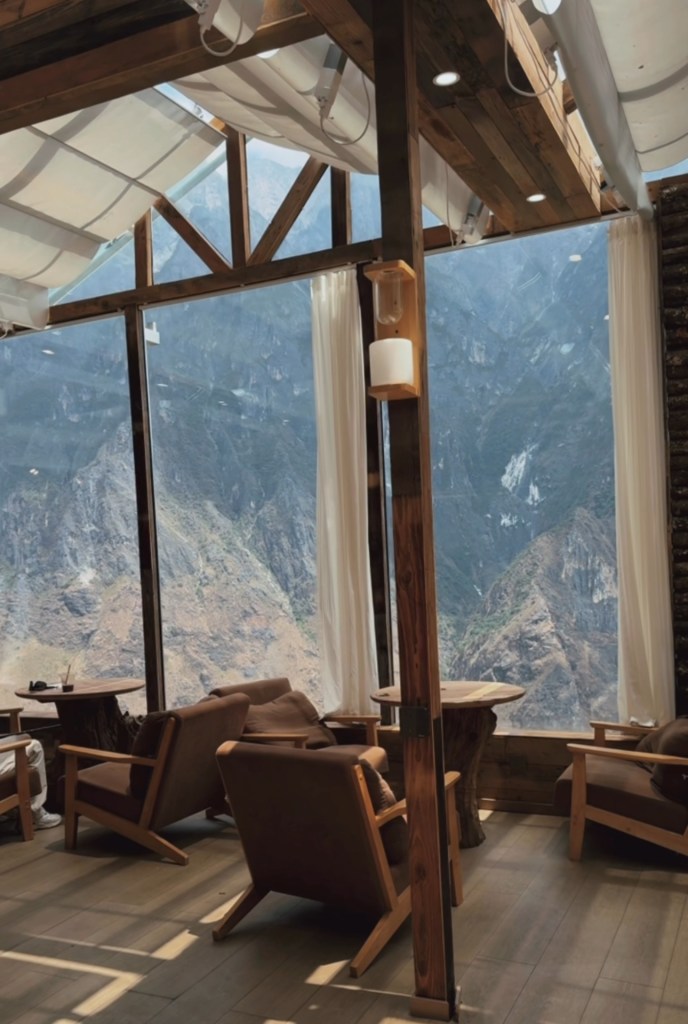
AND, the hotel! Our hotel has one hell of a VIEW!
The hotel itself is a family-ran, SUPER casual type of homestay; it really felt like I was just crashing somebody’s house. But the amenities were good – great TV with free movies (pretty important for us lol), clean and warm shower, and just really really nice and friendly people. (The people we’ve met in Yunnan were really super nice, to be honest!)

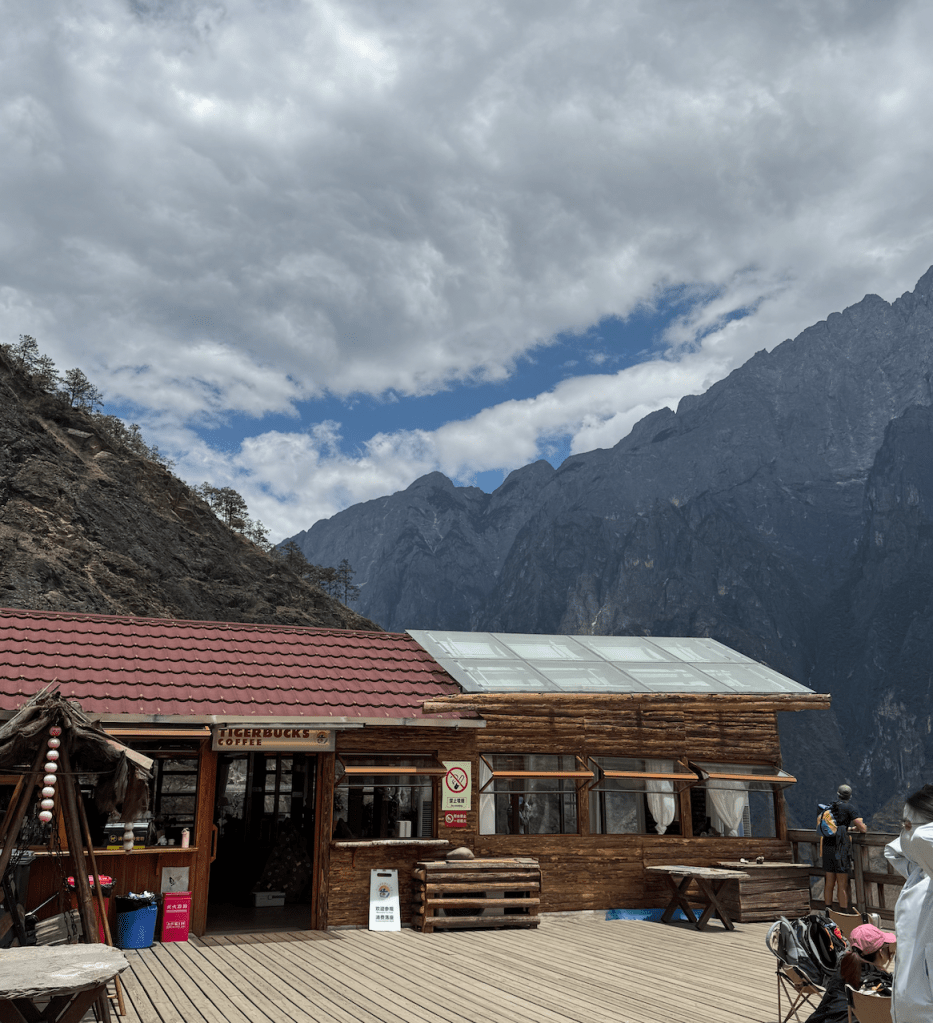
This hotel is pretty sick too. The Tigerbucks Coffee spot serves great coffee, cocktails and has a cute selection of pastries. What’s not seen in this photo is a huge viewing deck overlooking the gorge.

And then I had to use the washroom.
I’ve gotten a lot of questions about the toilet situation in China. For the most part of it, the toilet situation isn’t much of a situation – when you’re out in super crowded touristy “Old Town type” areas, don’t expect to find “decent” toilets. A lot of them still have signs reminding people to throw their used toilet paper into the waste paper baskets in the cubicles, so you can imagine the smell.
Most of them were squatters, some of them had a combination of squatters and toilet bowls. When I was in Beijing in one of the hutongs, I had to visit a toilet where (I got a mild shock when I entered the toilet because I could see the faces and knees of 3 ladies going about their businesses as I waited for my turn) I had to squat and pee next to a woman who was seated on the toilet bowl next to me. She was so close, I could SEE what she was watching on her phone as she does her Number 2. There were no doors. No walls, only chest-high partitions separating each stall.
I advise everyone to be armed with tissue paper and wet toilet wipes.
I saw a same same but different toilet at Tiger Leaping Gorge Halfway Hotel again and decided to take a photo since it was empty:

I guess I appreciate that they made the walls high enough so you don’t have to stare into someone’s face as you do the deed lol. I know it looks like it has good ventilation, but the smell… could possibly bring a dead person to life.

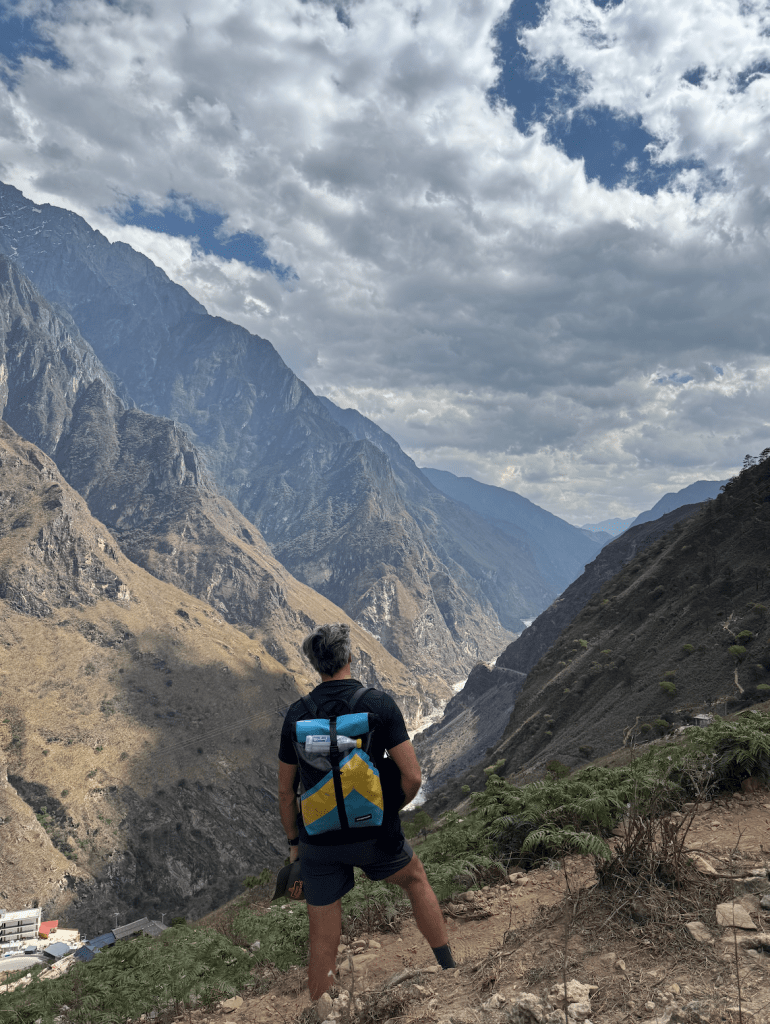
It was quite an easy hike to be honest, takes about 2 hours or 2ish if you take your time. Lots of flat terrain and occasional undulating ones. The view was breathtaking and it really felt great to be out in the nature with less people around. We were blessed with good weather, which I thought was pretty important because I would NOT want to do this hike in wet weather. The trail ends with a constant sandy downslope and I can imagine it to be silty and slippery when it rains.
SHANGRI-LA
Do you know that Shangri-La wasn’t called Shangri-La up until 2001? It’s previous name was Zhong Dian. But honestly, pretty good move to change it to Shangri-La huh? The mystic and allure of getting named after a mythical land.
It was cool and chilly at night in Shangri-La in May all thanks to its high elevation. We planned to stay at this spot for only 2 nights even though we heard a lot about the beautiful hikes one could take from here. To me, our stay in Shangri-La was pretty lacklustre; we stayed in the Old Town area and to be frank, we were already feeling pretty blasé at this point about ancient towns.
I have a good story about our ride from Tiger Leaping Gorge to Shangri-La though.
The good folks at our homestay in Tiger Leaping Gorge told us that she could book us a carpool ride to Shangri-La. The ride will be about 2 hours long and it’ll cost us 88 yuan/pax which was a steal because it would prolly cost us another 400-600 yuan if we booked a private hire.
How would you envision a “carpool ride”? Pick you up from your hotel, and perhaps another 3 – 4 persons from other hotels around the area and head over to Shangri-La? We boarded a car with a local driver and one other guy (who also looks like a local; super gross, scratching his greasy head, yawning LOUDLY, speaking loudly the whole time). Along the way, the driver would stop at random, lost-looking people waiting by the road and ask if they’re going to Shangri-La. Eventually, we picked up another 2 middle-aged men, separately. It was a very bizarre experience because we didn’t know what to expect, how many more people we’re gonna pick up in our beat-up 7-seater. And when we arrived at Shangri-La, the driver told us that he only does drop-offs at 3 spots, “Which one do you want?” Hahahahaha. It was quite a disaster since we weren’t familiar with the area. We alighted and eventually found our hotel after dragging our wheelie luggages up and down the cobblestone streets a few times.
Jesse was a little disappointed in our hotel. We put up at Arro Khampa Shangri-La by Zinc Journey which was thoughtfully situated in the heart of the Old Town. We paid $250/night for a suite but Jesse definitely expected a little more from this place. “Should’ve stayed in Banyan Tree,” he said. Oh well. We had a good stay overall (breakfast was quite lame though, ngl).
I think I’d do Shangri-La injustice if I continue talking about how we wished we extended our stay in Lijiang and skipped Shangri-La altogether. I think that Shangri-La would be a dream for hikers, and travellers who enjoy getting out into nature. We spent most of our 2 days in the old town (which is the smallest one out of all that we’ve visited) and only left town for Songzanlin Monastery which we thought lacked authenticity because of how it just feels like another photo spot for avid photographers / Instagram models. Most of the nature spots were plans or nature parks, and I think they can be day trips from Lijiang. And Lijiang was definitely a better base to be situated in.


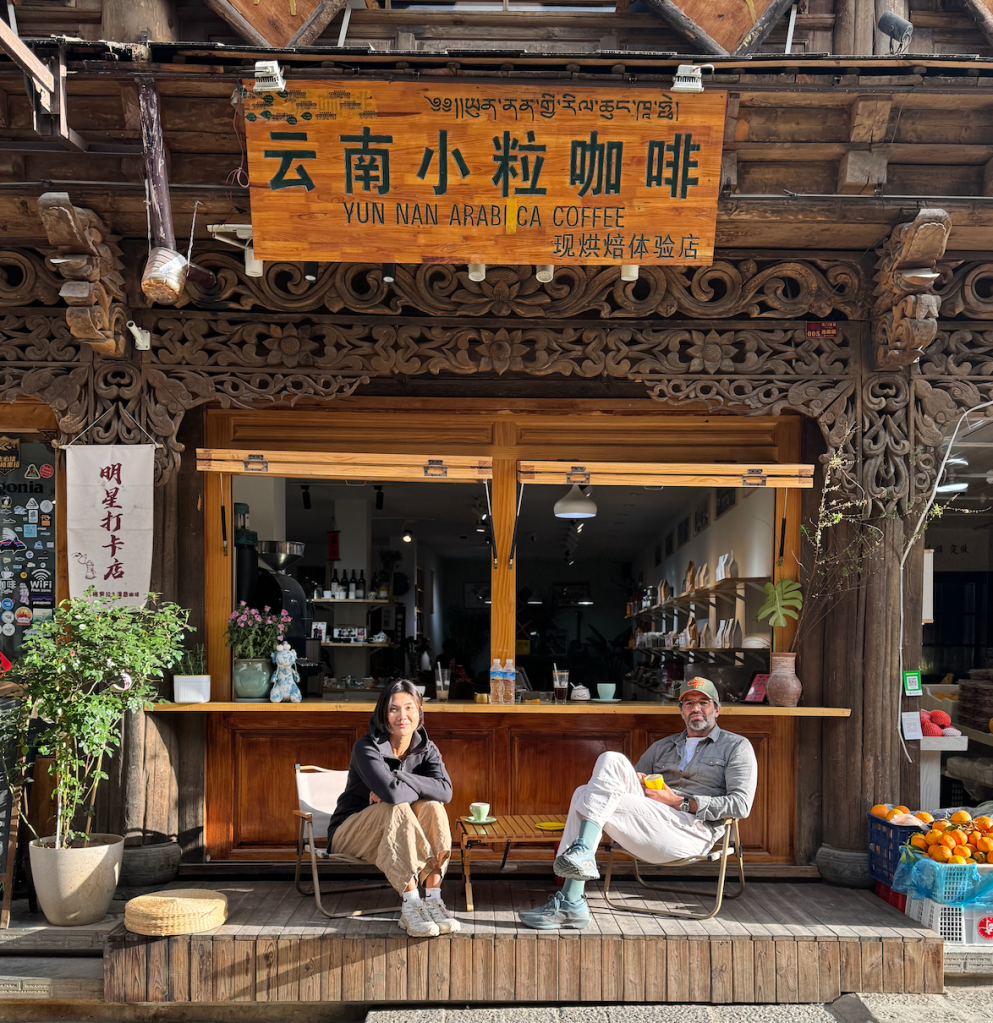

The main city area within Shangri-La is small (airport was only 15 mins drive away) and Songzanlin Monastery, the largest Tibetan Buddhist Temple in Yunnan was a mere 15 mins drive away. (Oh, do remember to bring along your passports when you’re visiting these bigger sights in China.)
There was a mildly-challenging flight of stairs to scale to get to the temples, it was made extra challenging because I get winded even from eating noodles too quickly at this high altitude haha. But frankly, it’s also nothing to be worried about.
I personally saw this cat take a leak on this two girls’ handbags before he came over and laid in the middle of the walkway. The two young ladies left their stuff unattended and were camwhoring a short distance away. What an asshole of a cat lol. Sorry for gloating.


No photography allowed in the temples, and I was quite happy to know that, because as you can see in the background of the photo above, this spot was also crawling with costume-d tourists just having private photoshoots. Sometimes, it’s amusing. Sometimes it can get a bit annoying. I just felt that the temple had finally withheld a bit of its dignity by not allowing photography in its grandiose prayer halls.
And then we went to Kunming for a night and mainly to catch our flight back to Singapore. Nice little city that doesn’t warrant more than 2 nights’ stay. We stayed at Moon and Chalice Hotel which was beauuuutiful and inexpensive (what a dreamy name too, right?).
–
I haven’t done up a blog post in a while and this was quite a bit of a verbal vomit for me. I hope you’ve enjoyed the read and enjoyed Yunnan vicariously through this entry!
Honestly, I think China has a bad rep: horrific toilet without doors, “rude people”, etc. Hmm. I think that there are rude people everywhere in the world, and I haven’t actually encountered one single rude person during this trip. A lot of the folks I crossed paths with were actually really down-to-earth, friendly and helpful. I’ve never once felt unsafe (with any situation that I was in or with my belongings wrt pickpockets or other petty crimes). The food was delicious. And if you would just remember to be respectful, friendly and smart (as you should regardless of where in the world you are), you’ll do fine.
As for language.. I think it was obviously easy for me because I speak Chinese and communication in both Beijing and Yunnan wasn’t much of a chore. With apps like Didi, Alipay or WeChat (the translation function was awesome!), getting around was very manageable. For non Chinese-speakers, there might be some things that would probably take a bit more effort – like understanding menus, reading write-ups in museums, communicating with shop keepers, etc. But I can imagine how that would also add to the fun and adventure of visiting a place where you do not speak their native language.
China is beautiful and so, so vast. I like how it was never really at the top of my Must-Go list, and how I’ve thoroughly enjoyed this trip to Beijing and Yunnan; I love proving myself wrong like that. 🙂 It would be great to return to Lijiang, or check out other Chinese cities that are high up on my list now like Cheng Du, Chong Qing, Xi An, Su Zhou and the Zhang Jia Jie area.
Looking forward to more adventures.



























 S I X P E G S